
LCL vs FCL from Dubai: Where a Full Container Starts to Pay
Shared space or your own box from Jebel Ali? The real break-even in CBM once destination charges are counted, the LCL fees that surprise first shipments, and when FCL wins anyway.
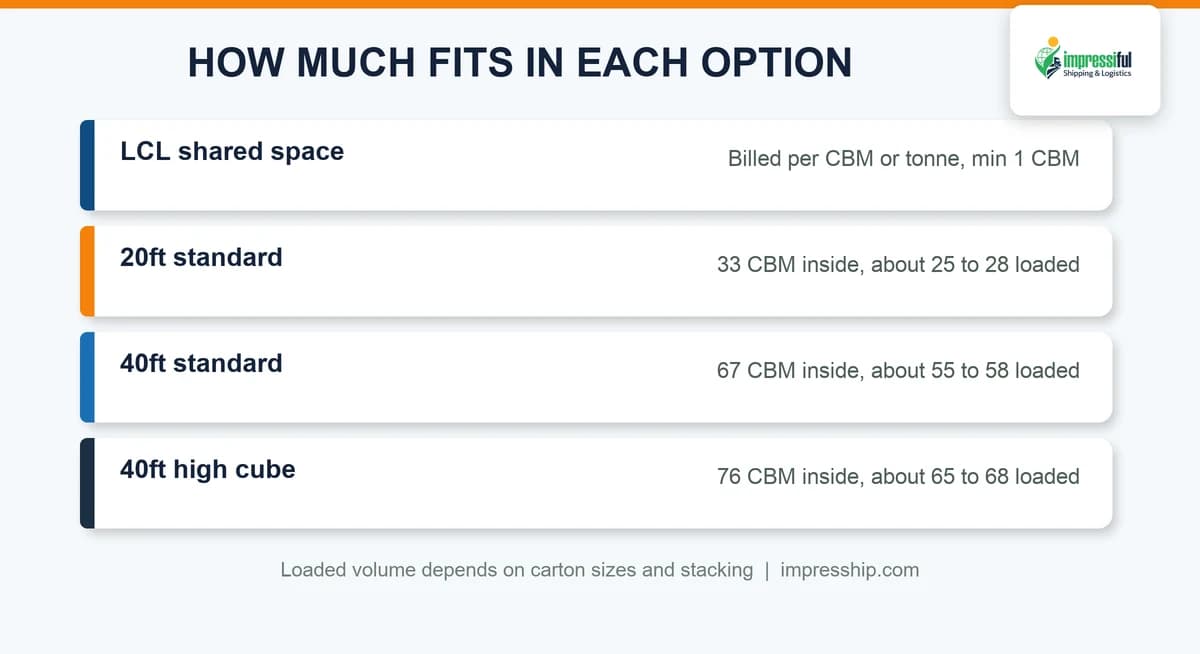
A standard 20ft container has 33.2 cubic metres of internal space and can carry over 28 tonnes, according to iContainers, yet many importers shipping from Jebel Ali to West Africa fill less than half of it. Shared LCL space to Tema, Lagos or Abidjan typically prices at USD 70 to 150 per CBM, while a 20ft box typically starts around USD 2,050. Choosing LCL vs FCL from Dubai is therefore a maths problem with a few practical twists. This guide gives you the real break-even, the LCL charges that surprise first time shippers and the cases where FCL wins anyway.
In practice, most West African importers find LCL cheaper below about 13 CBM and a 20ft FCL cheaper above about 18 CBM, with the space between decided by cargo value, fragility and deadlines. The freight rate alone points higher, but destination charges per CBM pull the break-even down.
LCL vs FCL from Dubai at a glance#
LCL (less than container load) means your cargo shares a container with other shippers and you pay for the space you use. FCL (full container load) means you book the whole box, sealed at loading and opened only at destination or for inspection.
| Factor | LCL (shared container) | FCL (your own container) |
|---|---|---|
| How it is billed | Per CBM or per tonne, whichever is greater | Flat rate per 20ft or 40ft box |
| Typical 2026 ocean range to West Africa | USD 70 to 150 per CBM | 20ft from about USD 2,050 to 4,300 |
| Minimum charge | Usually 1 CBM | One container, however full |
| Extra handling | Packed and unpacked at a CFS at both ends | Loaded once, opened at destination |
| Time added | Typically a few days at each end | None beyond the sailing |
| Exposure to others | Waits if any shipment in the box is held | Only your own cargo and papers |
| Best for | Under about 13 CBM, mixed or trial orders | Over about 18 CBM, fragile or high value |
The ocean ranges above match the lanes in our Dubai to Ghana cost guide and Dubai to Nigeria guide; always ask for a dated quote, because surcharges move every month.
Need this handled end to end?
Tell us your lane and cargo profile and we'll come back with a routing plan and an all-in rate.
The real break-even, worked through#
Freight alone flatters LCL. At USD 100 per CBM, you would need 25 CBM to match a USD 2,500 container. But LCL also carries origin and destination CFS charges, deconsolidation and delivery order fees that are mostly priced per CBM, while many FCL destination charges are priced per box.
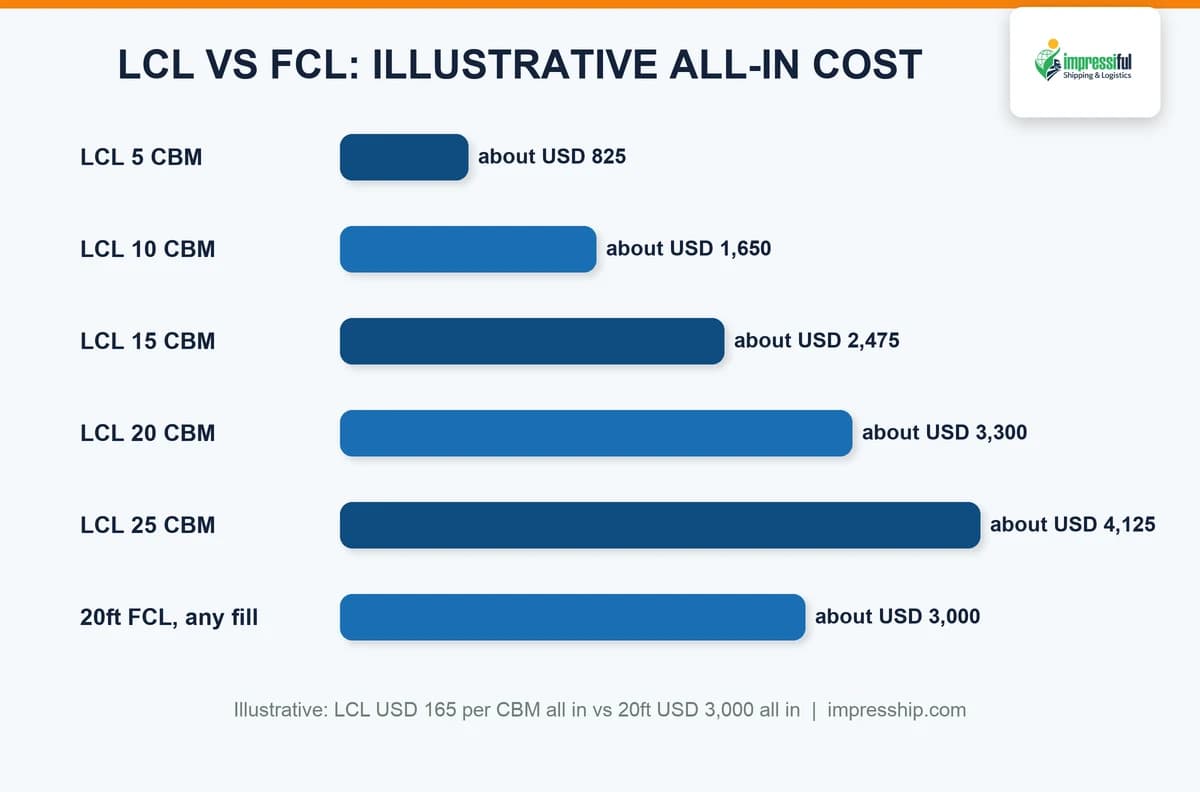
Here is an illustrative comparison using typical all in figures of about USD 165 per CBM for LCL and about USD 3,000 for a 20ft FCL door to port, including destination handling:
| Cargo volume | LCL all in (about USD 165 per CBM) | 20ft FCL all in | Cheaper option |
|---|---|---|---|
| 5 CBM | about USD 825 | about USD 3,000 | LCL by a wide margin |
| 10 CBM | about USD 1,650 | about USD 3,000 | LCL |
| 15 CBM | about USD 2,475 | about USD 3,000 | LCL, but close |
| 18 CBM | about USD 2,970 | about USD 3,000 | Roughly equal |
| 20 CBM | about USD 3,300 | about USD 3,000 | FCL |
| 25 CBM | about USD 4,125 | about USD 3,000 | FCL by a wide margin |
Your own numbers will differ by port and season, which is the point: get both options quoted all in, not just the ocean line. Most experienced importers switch to FCL at 13 to 15 CBM, slightly before the maths says they must, for the reasons in the next section.
When FCL wins even below the break-even#
- Fragile or high value goods. Electronics, glass, tiles and appliances handled twice at a CFS face more risk of damage and loss. A sealed box removes most of that.
- Shared container holds. If one consignment in an LCL box is held for inspection at Tema or Apapa, everyone in it waits. With FCL, only your own documents can delay you.
- Tight deadlines. LCL waits for the consolidator's cut off and the CFS queue at destination; FCL moves on the vessel you booked.
- Single supplier loading. When one factory or trader can load the box directly, FCL saves a warehouse step entirely.
LCL, on the other hand, remains the right call for trial orders, mixed purchases from several Dubai markets and anyone restocking little and often. Our cargo consolidation and warehousing service exists for exactly that, including Chinese cartons routed through Dubai to join your Gulf purchases. If even LCL is too slow, compare air freight against ocean for the urgent share of the order.
LCL charges that surprise first time shippers#
- Weight or measure. LCL bills per revenue tonne, the greater of 1 CBM or 1,000 kg. Dense cargo such as tiles or metal parts is billed on weight, not volume.
- Minimum charge. Most consolidators charge at least 1 CBM, so a 0.4 CBM parcel pays for a full cubic metre.
- Destination CFS fees. Unpacking, storage and delivery order charges at the port are often per CBM and can rival the ocean rate. The Ghana Ports and Harbours Authority publishes the port tariffs a serious agent will quote against.
- Free time at the CFS. Storage after the free days runs per CBM per day, so have your clearance papers ready before arrival; the customs documents checklist lists them.
Carriers such as Maersk sell LCL as a way to ship when ready rather than wait to fill a box, and that flexibility is real; just price the destination end before you book.
Frequently asked questions#
What is the difference between LCL and FCL?#
LCL means your goods share a container with other shippers and you pay per cubic metre or tonne, while FCL means you book the whole container for a flat rate. LCL adds handling at a consolidation warehouse at both ends, whereas an FCL box is sealed at loading. Our freight services cover both from Jebel Ali.
Which is cheaper, LCL or FCL?#
LCL is cheaper for small volumes, typically below about 13 CBM to West Africa, because you pay only for the space you use. Above about 18 CBM a 20ft FCL is usually cheaper once destination charges are counted, and between those points the answer depends on your port and cargo. The Ghana cost guide carries current planning ranges for both.
How many CBM is a 20ft container?#
A 20ft standard container has about 33 CBM of internal volume, according to iContainers, but most cartons load to roughly 25 to 28 CBM in practice. A 40ft standard holds about 67 CBM inside and a 40ft high cube about 76 CBM.
What is the minimum CBM for LCL?#
Most consolidators charge a minimum of 1 CBM, or 1 revenue tonne, per shipment. That makes very small parcels relatively expensive by sea, so loads under 1 CBM sometimes suit air freight better, as the air versus ocean comparison explains.
Is LCL slower than FCL?#
Yes, usually by several days. LCL cargo waits for the consolidator's cut off before loading and is unpacked at a container freight station on arrival, while FCL moves straight from the vessel. On the Jebel Ali to West Africa lanes the sailing itself is the same, as our ocean freight guide shows.
Send your cargo details for a same-day quote#
Send us your carton count, total CBM and weight, and the destination port, and we will quote LCL and FCL side by side from Jebel Ali with destination charges included, so you can see which one actually costs less.
Request a same-day quote or message us on WhatsApp with your cargo details.